5 Steps to Design a Flexible Layout and Master Your Corporate Event Space in SF
![[HERO] 5 Steps to Design a Flexible Layout and Master Your Corporate Event Space in SF](https://cdn.marblism.com/dZxEL7USS7L.webp)
In the high-stakes world of San Francisco corporate events, the "standard" hotel ballroom is rapidly becoming a relic of the past. Today’s industry leaders: from agile startups to Fortune 500 giants: are seeking something more than just four walls and a projector. They are looking for a canvas. As the professional landscape shifts toward hybrid models and experience-driven gatherings, the design of your event layout has become as critical as the content of your keynote.
Mastering a corporate event space in SF requires a blend of architectural intuition and operational strategy. Whether you are hosting a high-pressure product launch in the SoMa district or an intimate executive retreat, the physical flow of the room dictates the energy of the day. A rigid layout leads to a rigid experience; a flexible layout, however, allows for the spontaneous networking and "aha!" moments that define successful offsites.
At The Foundry SF, we have seen firsthand how a thoughtful floor plan transforms a simple meeting into a brand-defining experience. Located in the heart of San Francisco’s tech-centric SoMa neighborhood, our industrial-chic venue is designed specifically for these high-touch transitions. Here are five essential steps to mastering your layout and ensuring your next corporate event is as dynamic as the city itself.
1. Conduct a Detailed Floor Plan Analysis
Before a single chair is placed or a vendor is booked, you must understand the "bones" of your venue. A successful layout begins with a scaled floor plan that accounts for more than just square footage. You need to identify load-bearing columns, the height of the soaring steel beams, and the placement of power outlets for production-heavy activations.
A flexible space should be viewed through the lens of "zones." Instead of seeing one large hall, visualize how the 3,000+ square feet can be segmented. At The Foundry SF, our open-concept warehouse design allows for seamless transitions between a seated presentation and a standing cocktail hour. When analyzing your space, consider the "dead zones": corners or alcoves that can be activated with lounge seating or interactive brand displays. This prevents the room from feeling cavernous while ensuring every square inch serves a purpose.
For those planning complex debuts, it is often helpful to consult a product launch venue SF checklist to ensure your spatial analysis includes technical requirements and load-in logistics.
2. Optimize Seating for Energy and Flow
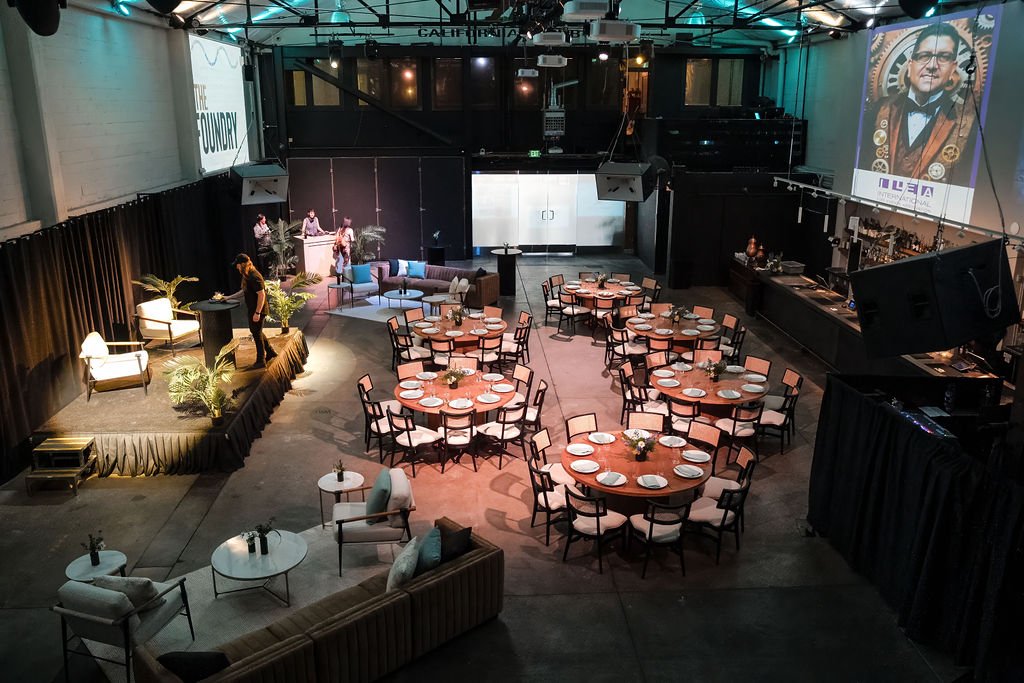
The way your guests sit: and where they move: directly influences their engagement levels. The traditional "classroom style" might work for intensive data training, but it can stifle the creative energy needed for a brainstorming offsite. To master a corporate event space in SF, you must offer a variety of seating heights and textures.
Consider a "layered" seating approach:
- The Power Core: Use traditional rows or U-shaped seating near the main stage for focused attention.
- The Soft Perimeter: Place modern lounge furniture and greenery around the edges of the room. This provides a "mental escape" for attendees who need a quick break without leaving the session.
- High-Top Hubs: Scatter bar-height tables near the back to encourage late arrivals to slip in quietly or to facilitate standing networking during breaks.
By breaking the monotony of identical rows, you create a space that feels curated rather than manufactured. Our venue often utilizes this modular approach to accommodate groups of up to 300, ensuring that even at full capacity, the room breathes. Learning how to design a corporate offsite that feels like an experience often comes down to these small, intentional seating choices.
3. Prioritize the "Handshake" of the Event: Entry and Registration
The first ten minutes of an event set the psychological tone for the rest of the day. If guests are met with a bottlenecked entrance or confusing signage, they begin the day in a state of mild friction. Mastering your space means designing a high-efficiency entry point that doubles as a branding opportunity.
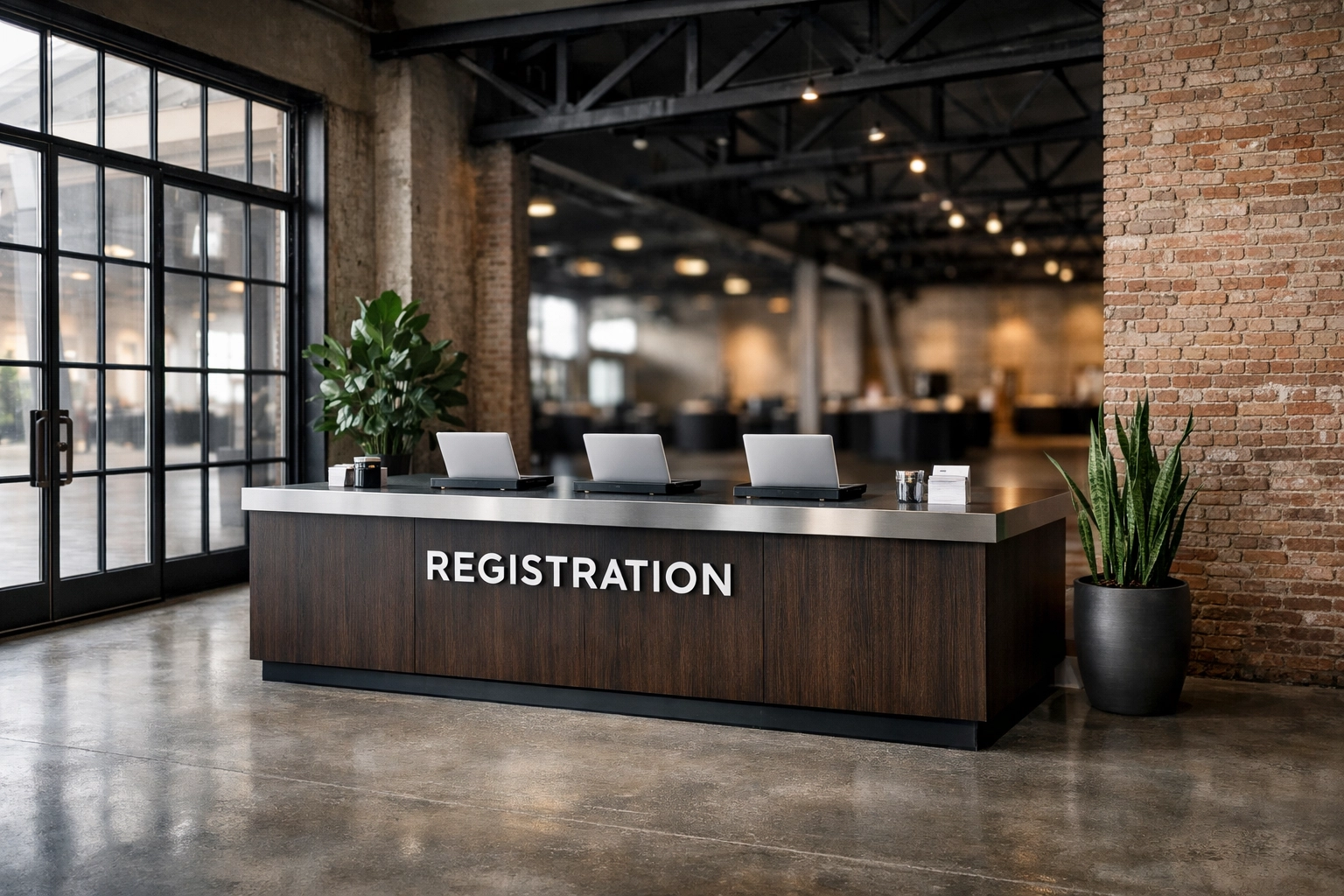
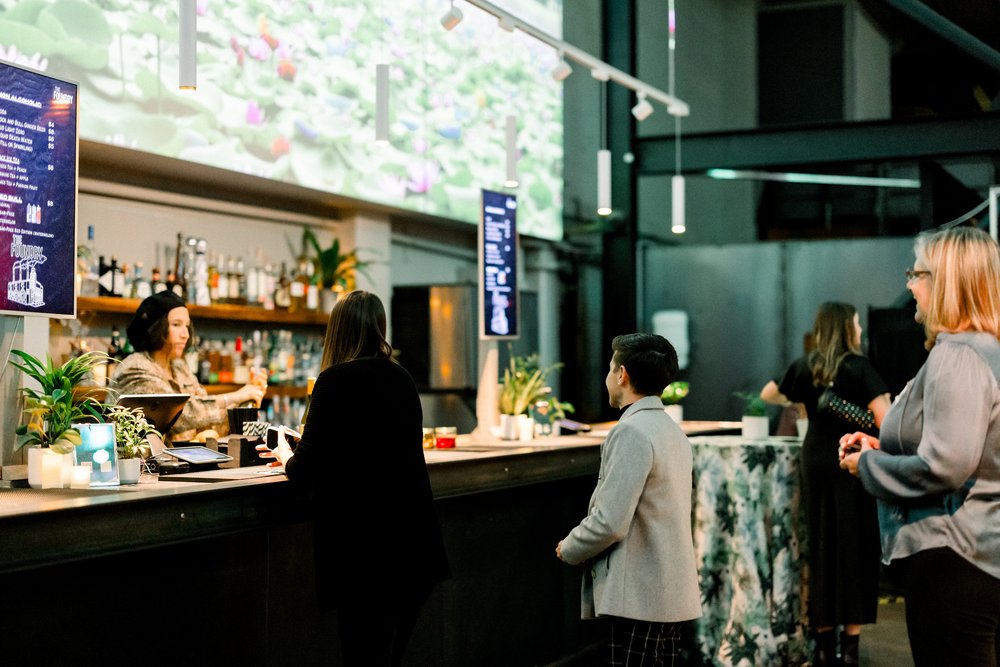
In a turn-key venue like The Foundry SF, we emphasize clear sightlines from the moment guests step off the sidewalk in SoMa. Use easy-to-read digital signage and strategically placed registration desks that guide traffic naturally into the main area. If your event involves heavy security or high-profile VIPs: common during Super Bowl week events: ensure the layout allows for a "pre-function" zone where guests can check coats and grab a beverage before entering the primary meeting space.
4. Leverage Lighting and Multimedia as Architectural Elements
In an industrial-chic space, lighting is more than a utility; it is a design tool that defines the boundaries of your flexible layout. High-quality production-ready infrastructure allows you to "redraw" the room using only light and sound.
At The Foundry SF, we utilize professional AV equipment and digital projections to transform the warehouse's raw textures: like exposed brick and polished concrete: into immersive environments. For example, during a morning session, bright, cool-toned lighting can keep the energy high. As the event transitions into an evening reception, warm uplighting and custom digital menus at the bar can instantly signal a change in pace.
Strategic lighting can also "hide" parts of the room that aren't in use, such as a catering prep area or a stage being reset for a performance. This ability to manipulate the environment is what separates a generic room from a perfect corporate event venue.
5. Plan for the "Pivot": Multi-Space Flexibility
The true mark of a master event planner is the "pivot": the ability to transition the space from one use to another without interrupting the guest experience. This is where the choice of venue becomes paramount. You need a space that offers multiple distinct areas that can either be unified or separated.
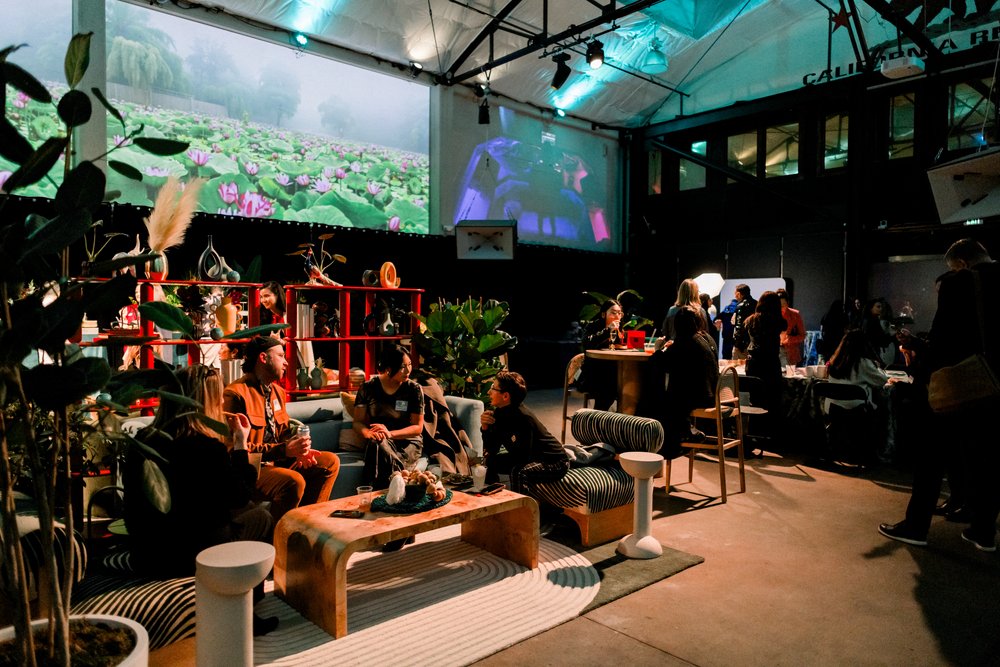
For a full-day offsite, you might start with a general assembly in the main hall. During lunch, the space can be quickly reconfigured: the main stage stays for a keynote, while the perimeter lounge areas become breakout pods. The Foundry SF’s versatile layout is built for this exact purpose, offering a turn-key solution where furniture can be moved and AV settings can be adjusted at the touch of a button.
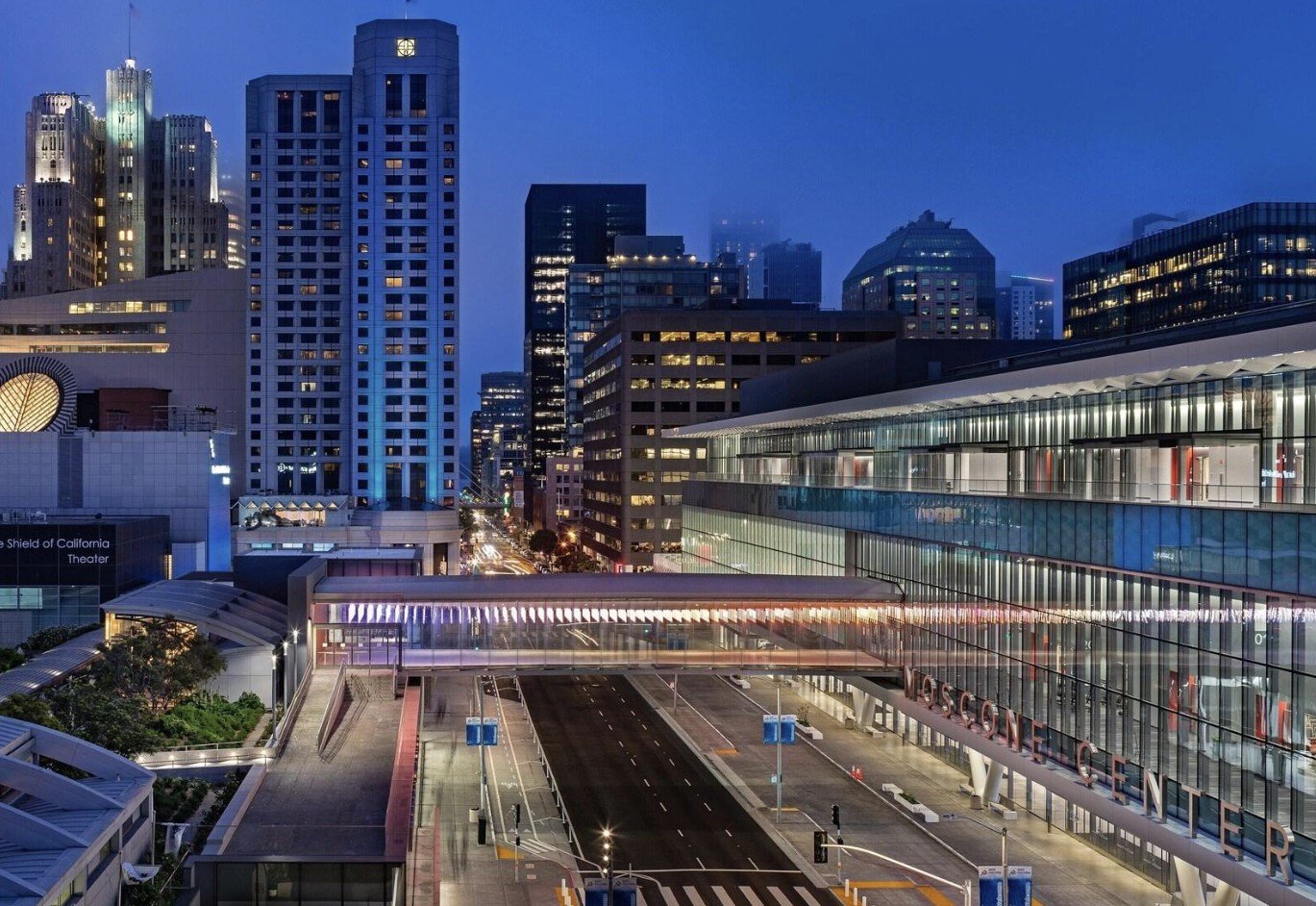
Being located in the SoMa district provides an added layer of flexibility. Its proximity to the Moscone Center makes it an ideal "satellite" space for conference breakouts or VIP happy hours. Understanding the SoMa edge means recognizing that your venue’s layout doesn’t stop at the front door: it extends to the neighborhood’s logistical advantages.
The Turn-Key Advantage in San Francisco
Designing a flexible layout is a complex puzzle, but you don't have to solve it alone. In a city where event costs are rising and expectations are higher than ever, choosing a venue that offers full-service planning and production-ready infrastructure is a strategic move.
The Foundry SF is more than just an industrial-chic shell; it is a production-capable partner designed to help you master your corporate event. From our soaring ceilings and modular furniture to our deep roots in the SoMa creative community, we provide the industrial canvas your brand deserves. Whether you are navigating the rising event costs or looking for a space that crushes the generic hotel ballroom, our team is ready to help you blueprint your success.
Elevate Your Next Offsite
Don't settle for a rigid space that limits your team's potential. Master your next San Francisco corporate event by embracing a layout that prioritizes flow, function, and flexibility.
Ready to see how our industrial-chic space can be tailored to your vision?
Contact The Foundry SF today to schedule a private walkthrough and discover why we are the preferred choice for San Francisco’s most innovative teams. Let’s build something unforgettable together.